
-
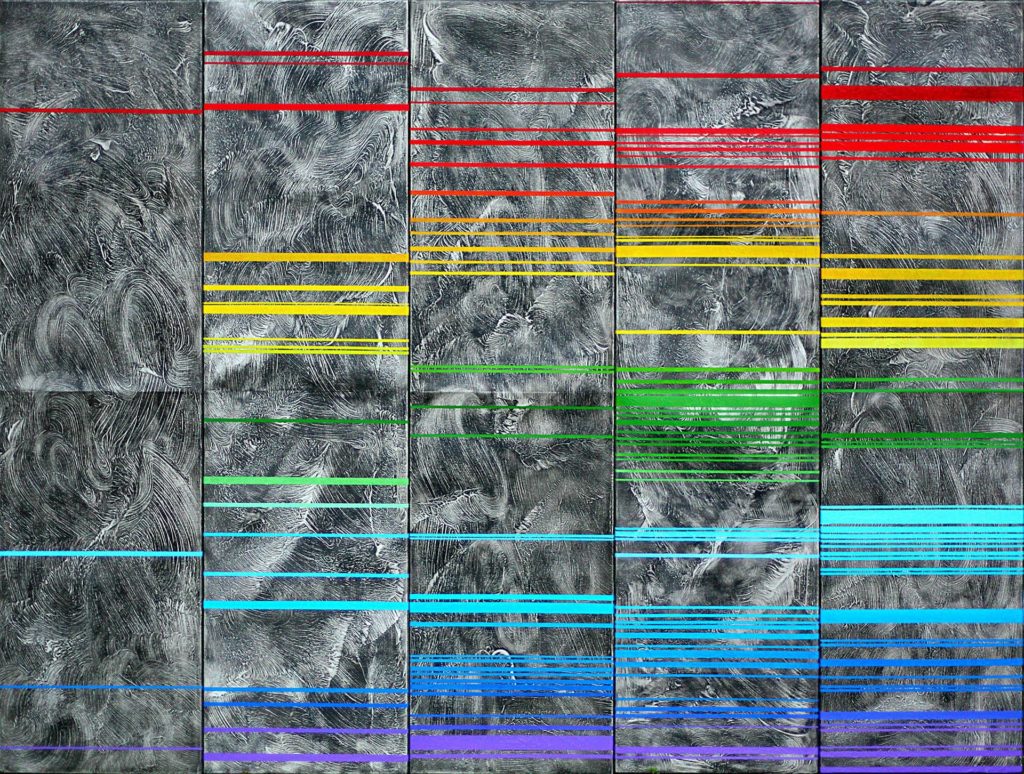
"Codes"
-

"Codes" position II
-
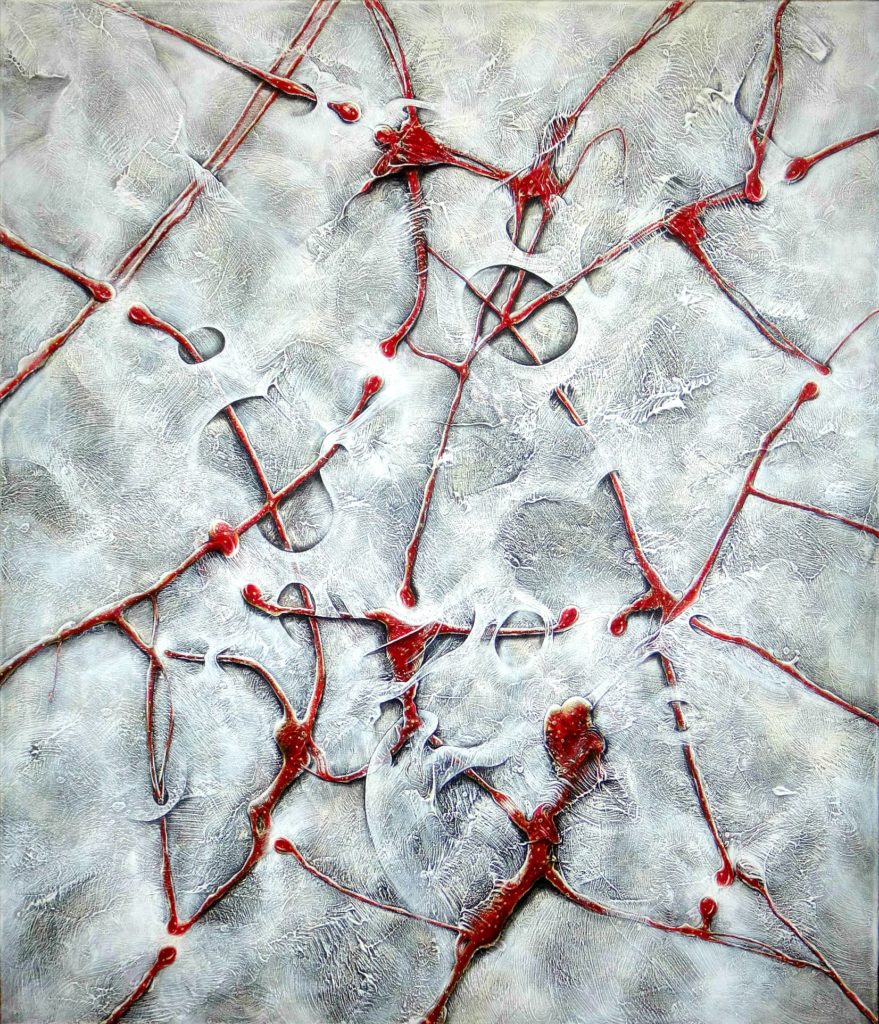
"Neuron"
-
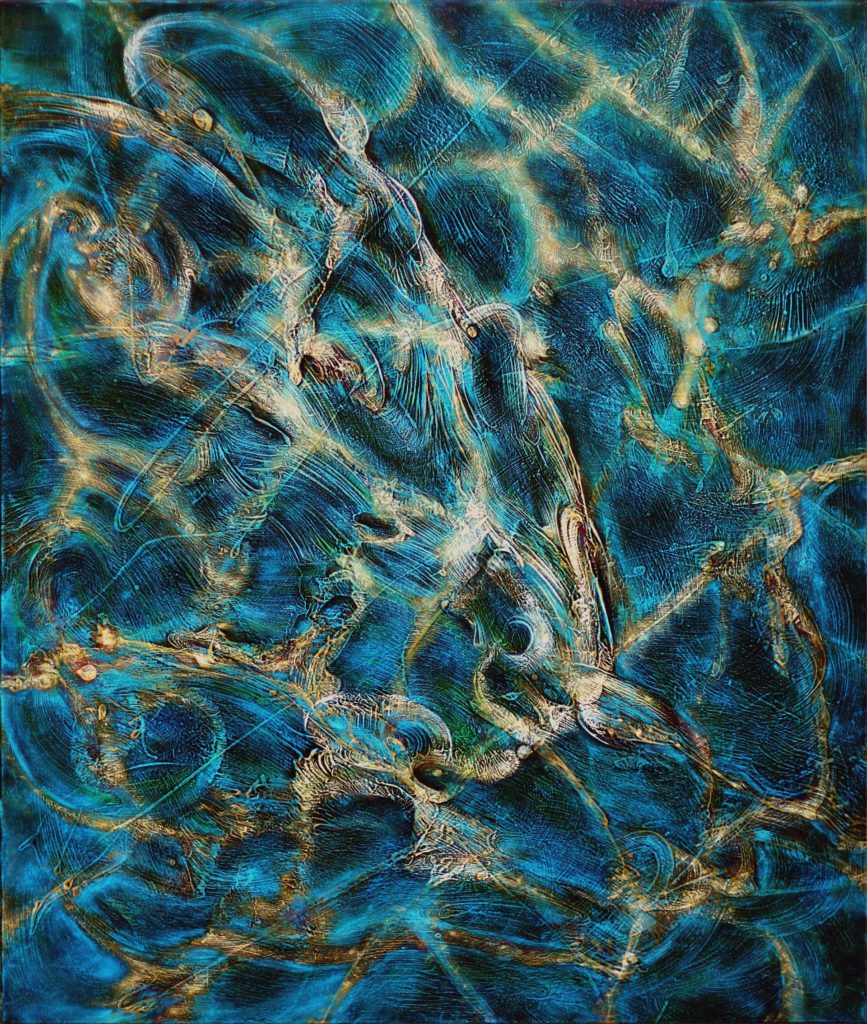
"Universe I"
-
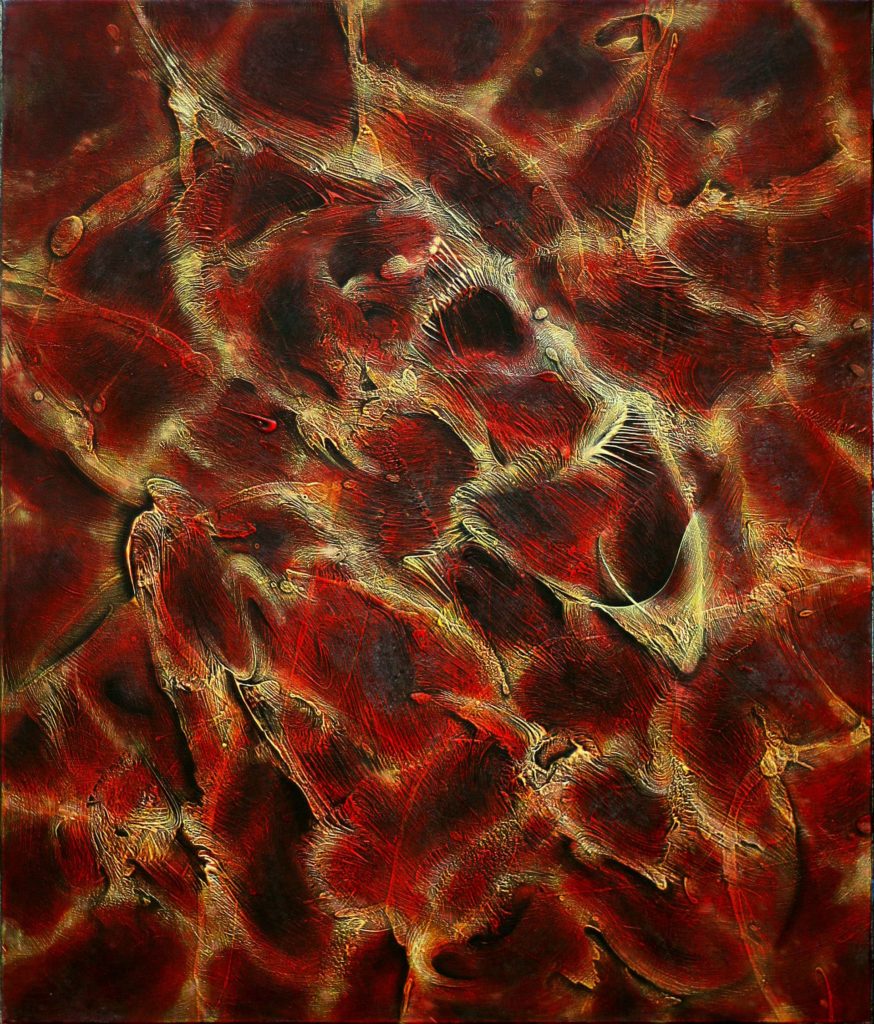
"Universe II"
-
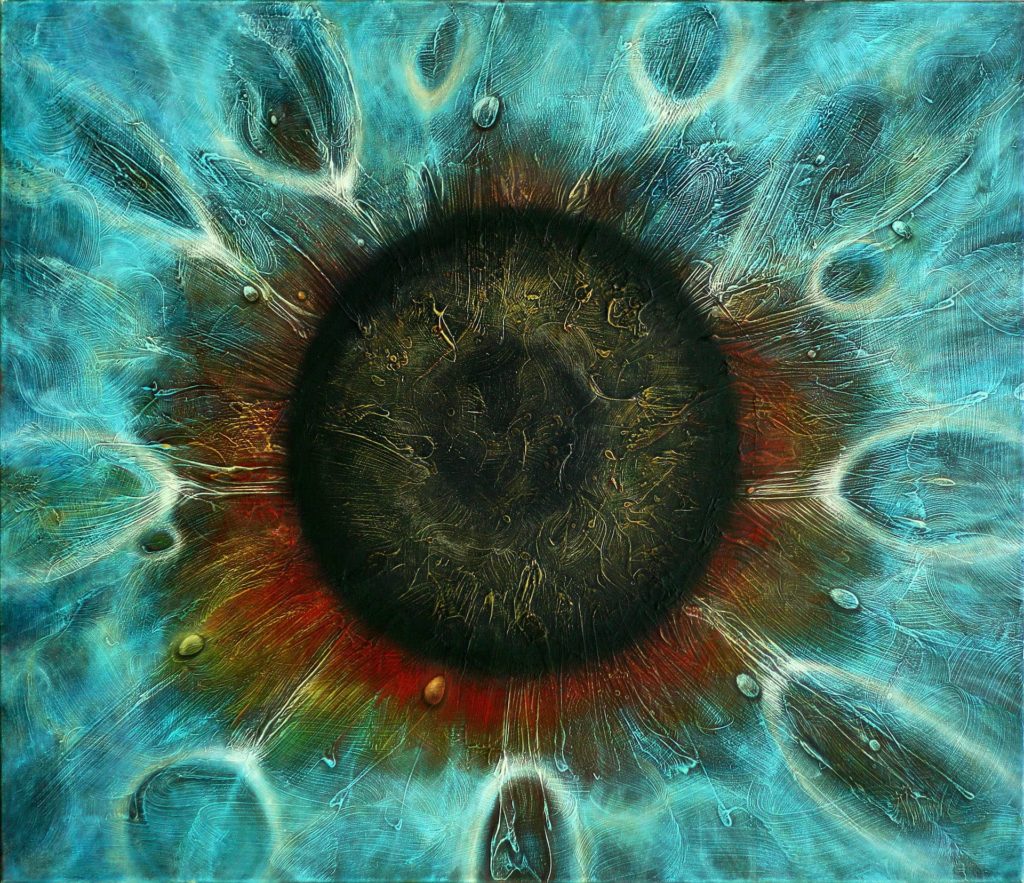
"Iris I"
-
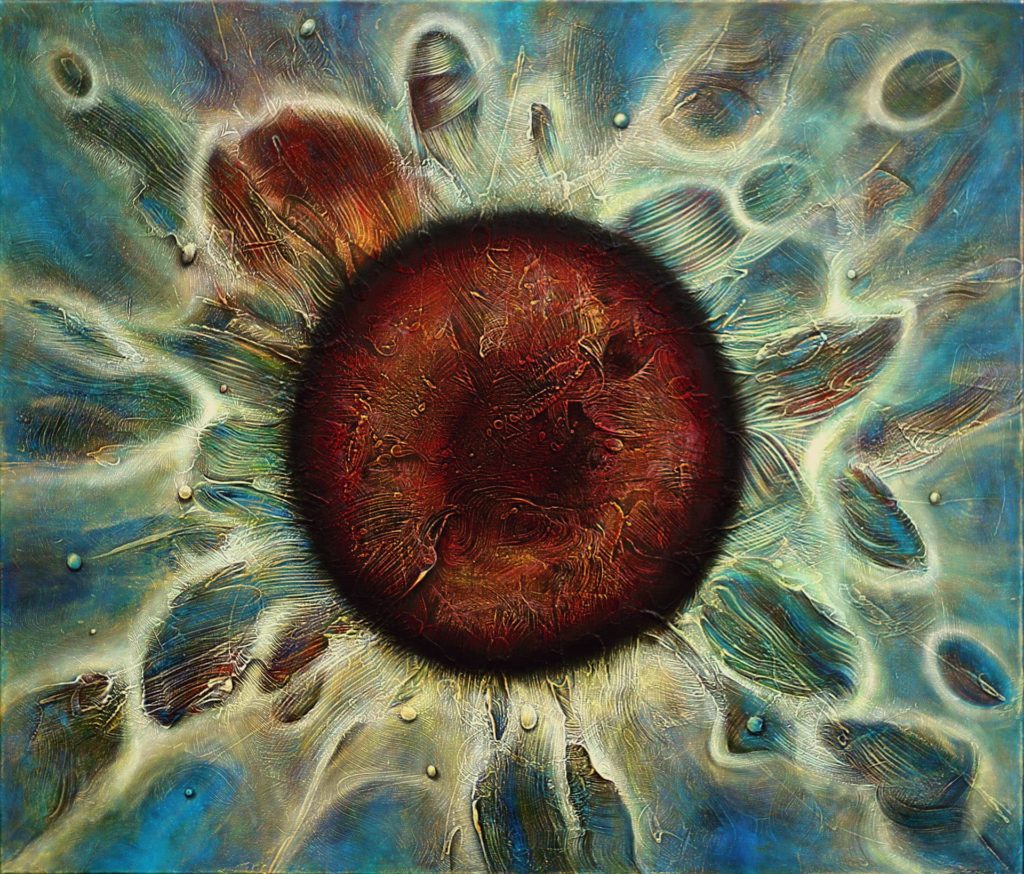
"Iris II"
-
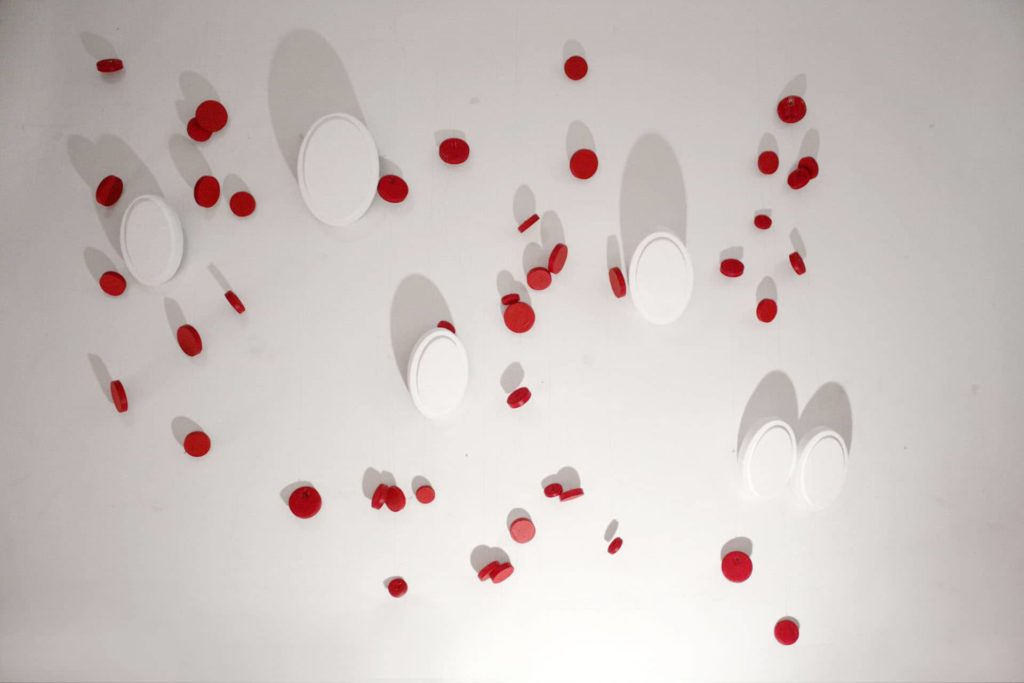
"Bloody cells"
Hiding in Plain Sight
The main idea behind this exhibition is an artistic approach to picturing the astonishing visual correspondence between the captured macro-cosmos and the smallest particles that we know of today, which science refers to as micro-cosmos.
But apart from the visual aspect, it reflects a deeper meaning and talks about the correspondence between the laws that govern developments of sub-atomic scale and those of the space-time continuum, on a cosmic scale. The indivisibility of all components and processes in the universe and the fact that we are an inseparable part of this totality was my inspiration.
The meaning of life and death has intrigued me since early youth, as well as the concept of the “infinite” universe. In a way, I have concluded that life, death and the rules of the universe are interconnected in one way or another as a continuity, repetition, reproduction/reincarnation or a part of something bigger, which cannot be seen or understood. Curiosity about these topics and research through various books and articles, has led to experiencing our universe as an integral part of our life on earth and not only as inaccessible remote celestial objects.
“Science fiction”, which is an incredible tool in developing our infinite imagination, has always had an immense influence on my artwork. On one hand, there is the possibility that it has made me choose for art in the first place and on the other hand, it was my own strongly developed imagination that has led me to liking science fiction.
New developments in technology have boomed in recent years, especially the last 5 years and have opened the doors of the solar system and the Milky Way to galaxies distant and unimaginable to us until now. The brought spectrum of information to be found on the internet, as well as the possibility of fast communication, have also had an influence on how information reaches us. This makes it possible for us to follow new scientific and astrophysical inventions and experiences in ways unimaginable until now.
The year of 2013 has brought a radical change in my life, with the creation of a new life, my son Matis. I started being even more interested in life/creation and while exploring through different books and articles on this topic and throughout all the discussions around it, I came across the Seven Principles of the Universe of Hermes Trismegistus and his Principle of Correspondence: “As above, so is below. As below, so above it.”. It fully complied with my earlier thoughts and made me realize that this was part of the ancient antiques, but had remained unknown to me until that time.
In modern times, the term Correspondence Principle was used in 1913 by Niels Bohr, while developing his model of the atom. According to this principle, established theories, which have proven right in the observable scale, could also be applied on an atomic scale, where observation was mostly impossible and they had to rely on results of calculations in the observatory world. Today the Correspondence Principle is still applied. An example is the correspondence between quantum mechanics – which describes particles on a sub-atomic scale, which mostly still don’t have a measuring unit or an observable way of measuring them – and classical mechanics, which comes down to “everyday situations”. “As above, so is below. As below, so above it.”
Recently, while watching a television documentary about new mapping technologies and discoveries in astrophysics, they showed a map of the observable universe, made up of super-clusters of galaxies. In fact, each point on the map represented several galactic super-clusters. My first thought, when looking at how groups of galaxies were aligned and interrelated, the map visually looked more like our nerve system or a single brain cell. This again made me think of the phrase: “As above, so is below. As below, so above it.”
Another part of the exhibition deals with the universe within us and the fact that we ourselves are extraordinary creatures. Starting with the fact that our very existence begins with a code, which is found in our DNA and is also present in every cell of every living creature on Earth and even in plant cells. Besides this fact, DNA is made up of combinations of 5 atoms, which all find their origin in the universe, beginning with the nuclear fusion of hydrogen, up to the formation of elements in exploding stars. Therefore a complete section of the exhibition is dedicated to the phenomenon ‘DNA’ and the five chemical elements, of which it is formed.
These themes return in all four exhibition platforms, but the works include many other meanings. As an example, the fact that we are entirely dependent on our senses, in terms of observation and perception of reality and the world around us. The human eye is technically built to see light, which is part of the electromagnetic spectrum. This means that the “visible window” of the human eye is very limited, taking into account that there are also other types of rays, the frequency of which our eye cannot read. As such, technological tools help us, as if they were the expansion of our senses. But however, we still have not managed to visualize or measure all forms of energy and mater inside our universe, some of which science has a strong suspicion that they must exist, such as dark matter and dark energy.
Therefore this exhibition will continue, as does the search for the absolute truth continue, which expands our field of sight with every scientific or astrophysical discovery.